


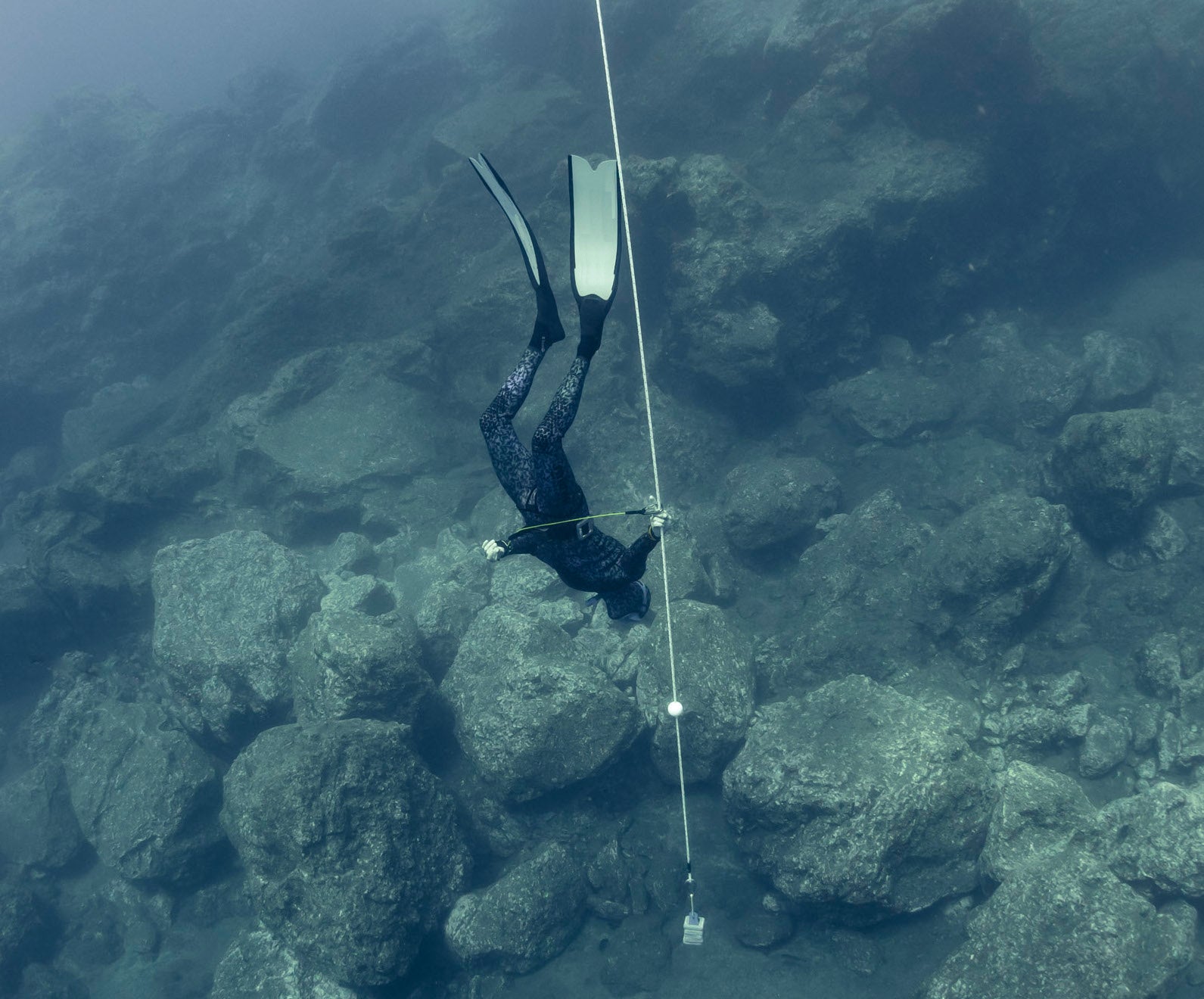
Lanyards FreeXperience
La apnea es pura y simple. También tiene que ser segura. Este es el concepto de lanyard que hemos tardado casi veinte años en construir para ofrecer ambas cosas.
La mayoría de los lanyards se diseñan y se dejan sin probar. Los nuestros no. Redactamos protocolos de ensayo de campo, construimos un banco de masa en caída y llevamos lanyards completos hasta la rotura en una máquina de ensayo de materiales calibrada. Cada valor de resistencia de esta página está medido, no estimado.
El resultado es un sistema completo: fijaciones a la cintura y a la muñeca, además de pulseras, cinturones, cables y mosquetones, para que montes exactamente la configuración que tu buceo exige.
Más abajo: ejecuta tú mismo el modelo de masa en caída, consulta los resultados medidos y descarga los documentos de ensayo que publicamos para jueces y fabricantes.
El Campeonato del Mundo AIDA 2019 en Francia utilizó FreeXperience como lanyard oficial.
Drop-weight simulator
A dropped weight does not load a lanyard with its own weight. It loads it with whatever force is needed to stop it, and that depends almost entirely on how far the lanyard stretches while stopping it. Set up a test and see.
Technical terms and formulas
- Speed at impact
- Impact velocity, v = √(2gh), with g = 9.81 m/s².
- Energy at impact
- Kinetic energy carried by the weight, E = m·g·h.
- Impulse
- The momentum the lanyard has to absorb, J = m·v, in newton-seconds.
- Average force while stopping
- F = m·g·(h + d) / d, where d is the stretch. This follows from energy conservation and does not depend on the material.
- Peak force
- Peak factor × average force. The peak factor is the ratio of peak to average and is set by the shape of the force–extension curve: 1.0 for a constant-force element, 2.0 for a linear-elastic response, above 2.0 for a stiffening cord. Average force is what energy conservation gives you; peak force is what breaks hardware and reaches the wrist.
- The same pull as hanging … kg on it
- Equivalent static load, peak force ÷ 9.81. A force is not a mass — this is a conversion at 1 g, for comparison only.
- Where the reference marks come from
- Retrieval loads are drag calculations, F = ½·ρ·u²·CD·A in seawater at 1.5 m/s. The breaking range is our own measured data. EN 355 is the European standard for fall-arrest energy absorbers and caps the force reaching a harnessed user at 6 kN in air; it is shown for scale only, and a wrist is a far weaker attachment point than a harness.
Full derivation in §6.1 and §6.2 of Freediving Safety Lanyard Testing, below.
Model from Freediving Safety Lanyard Testing §6.2. Breaking strengths are our own measured results: 145 kg for the complete lanyard, 255 kg for the wrist band, where the test bench maximum was reached. Measured on a Lloyd LRX Plus with a 2.5 kN load cell.
Reference documents
Freediving Safety Lanyard Testing
A proposed method for the strength check AIDA §5.1.15 requires but does not define. 7 pages.
Download PDFThe Wrist Band Closure Under Load
Why a correctly closed Velcro cuff holds a counter-ballast retrieval. 8 pages.
Download PDFOur Lanyards and accessories

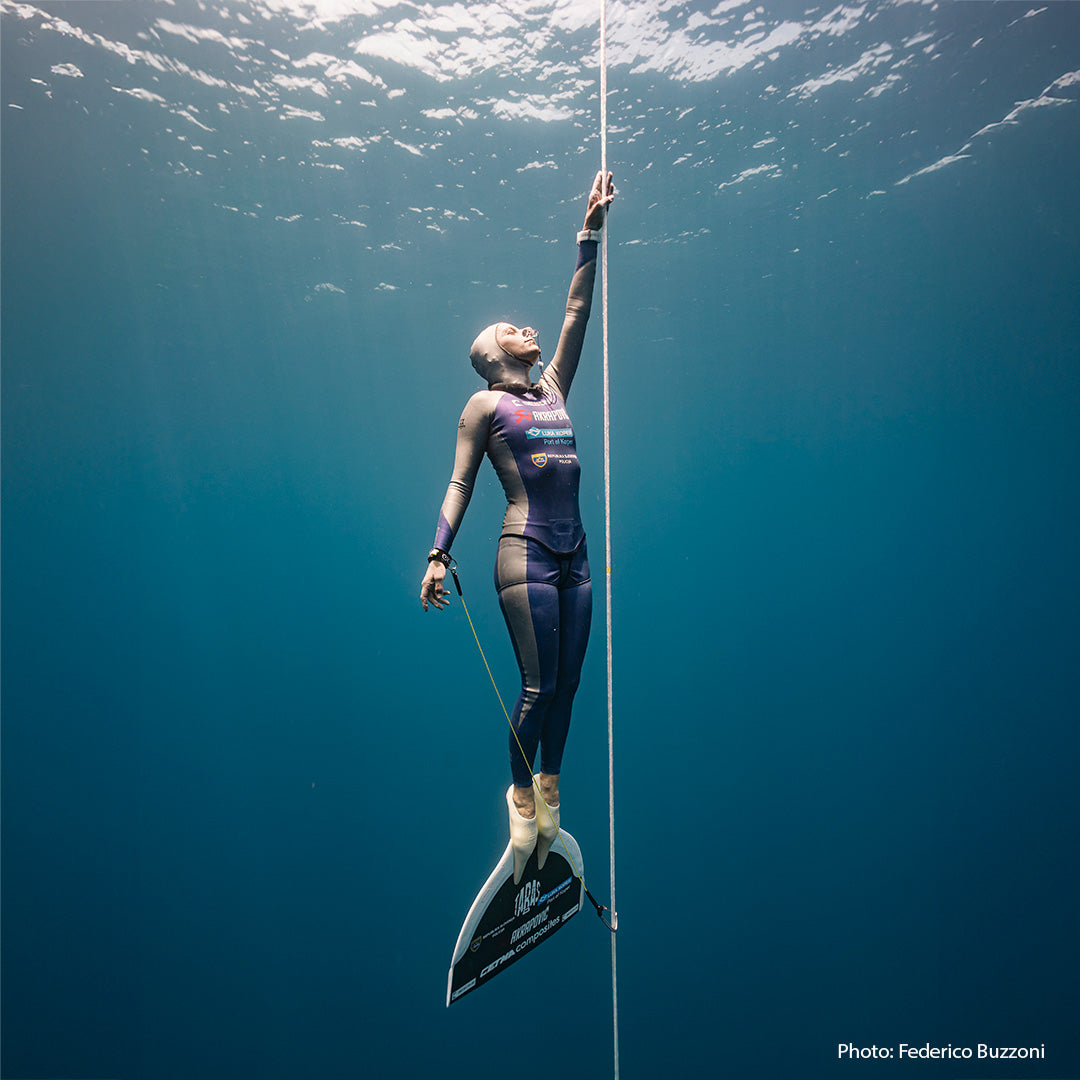



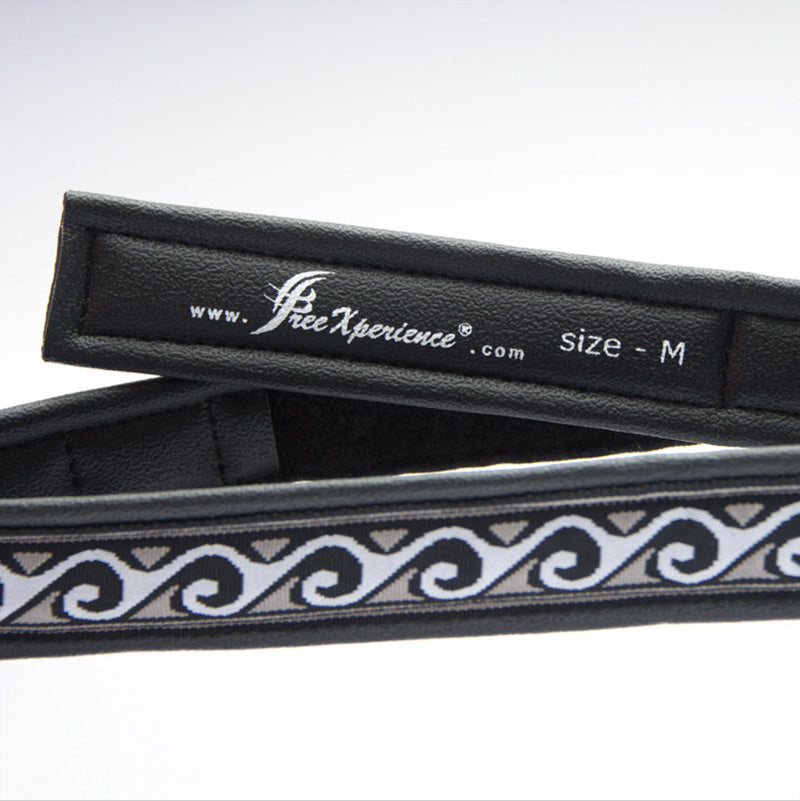


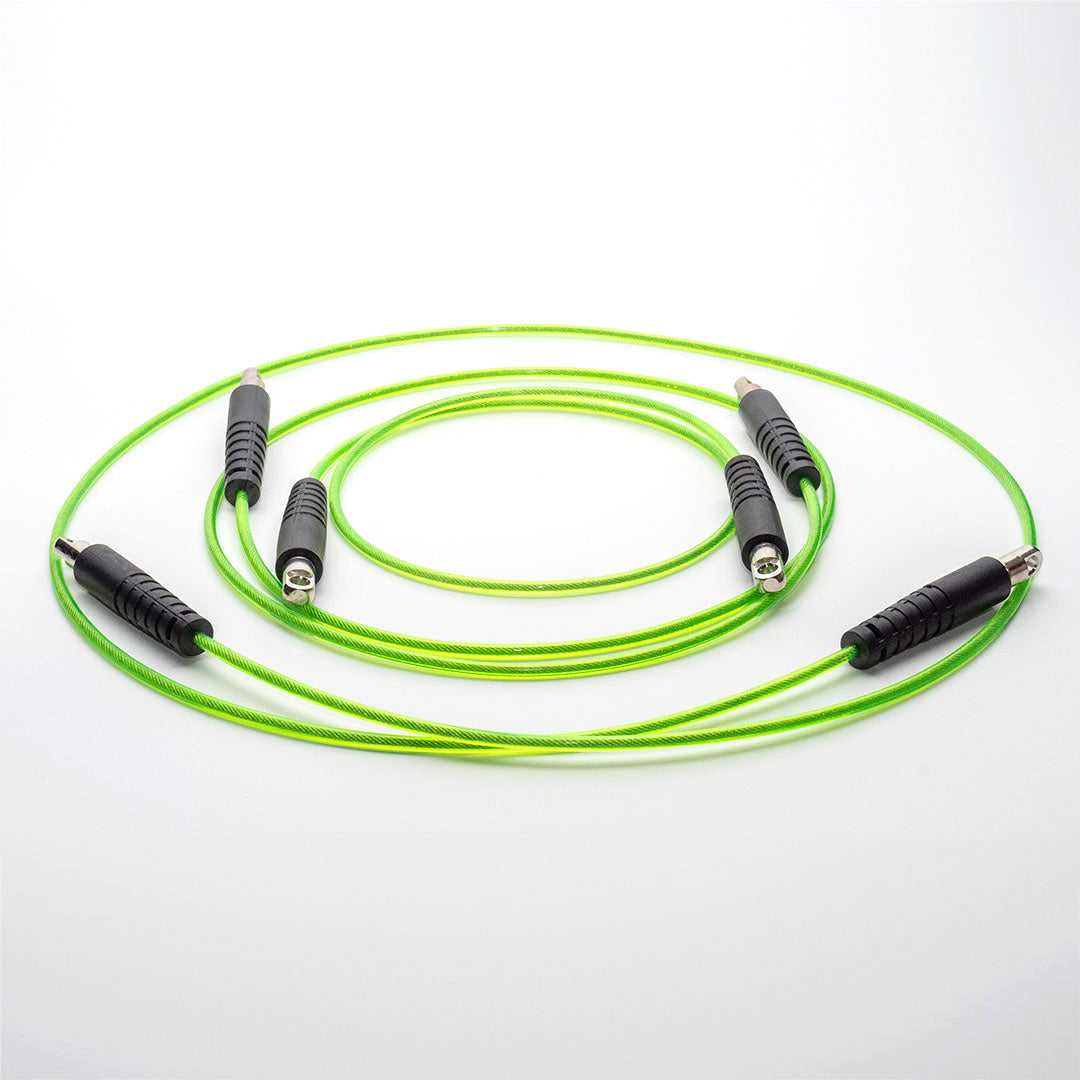

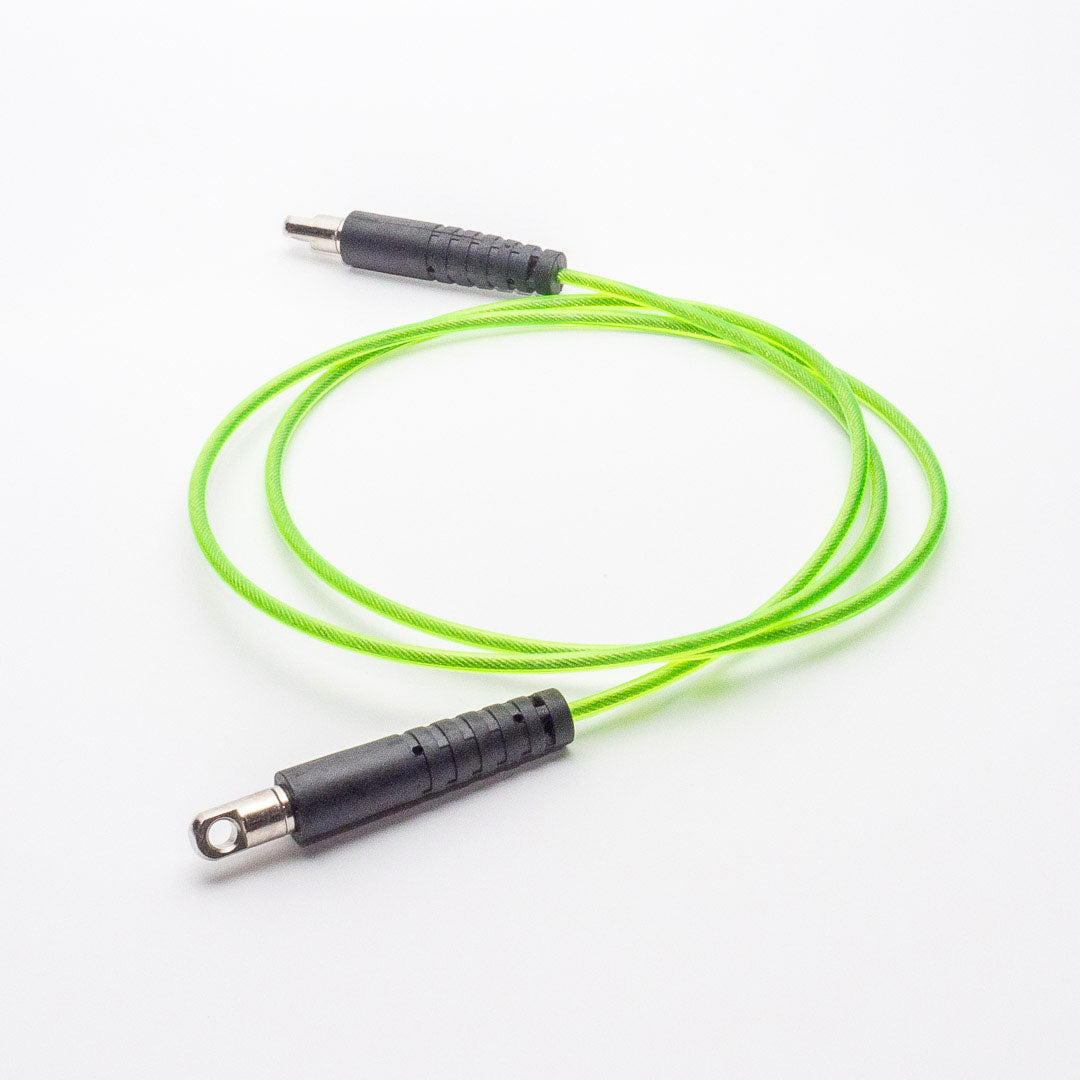

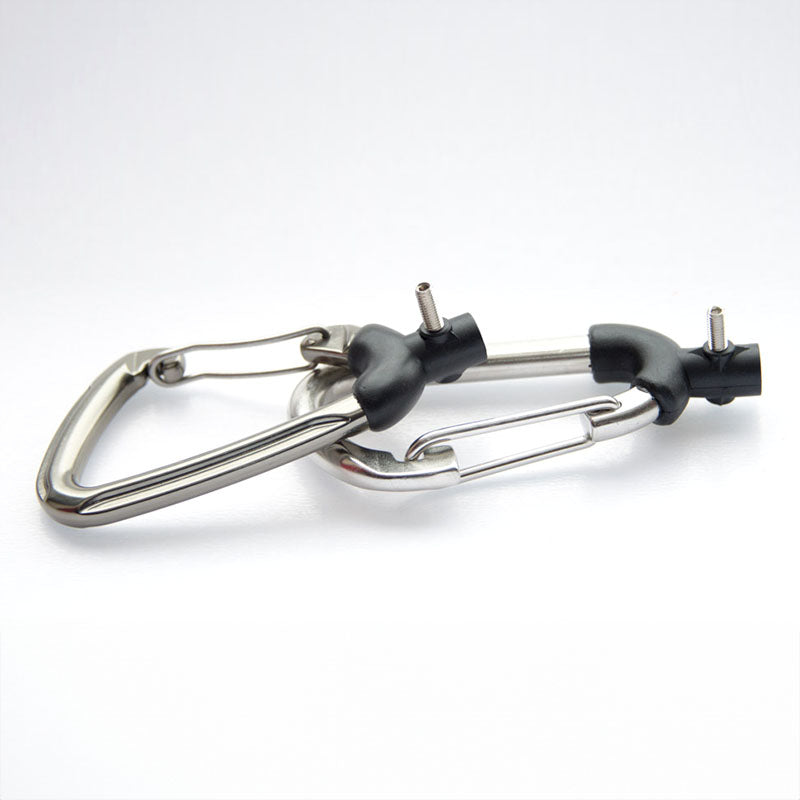

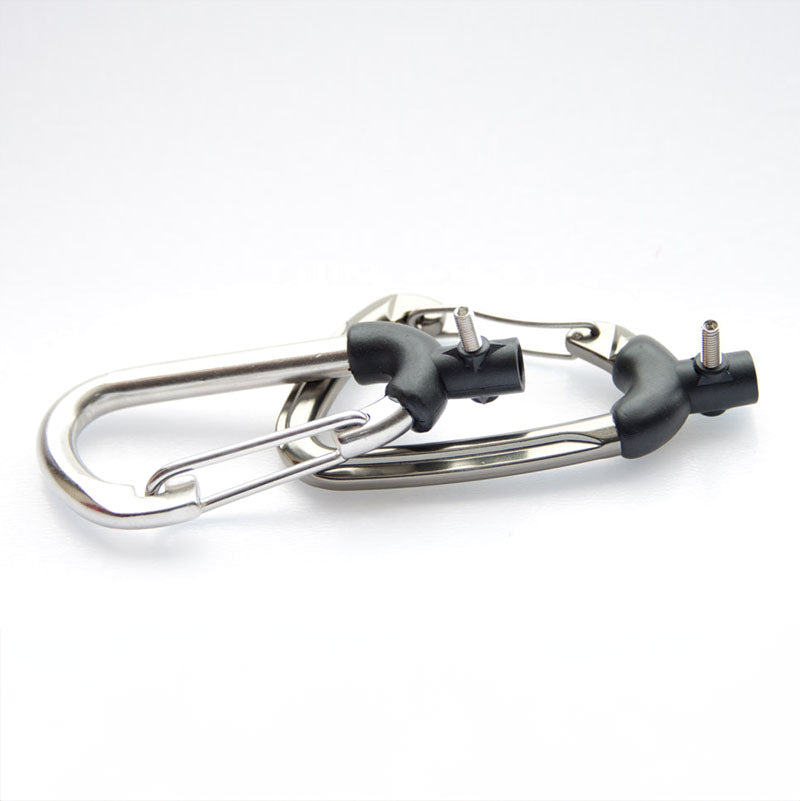

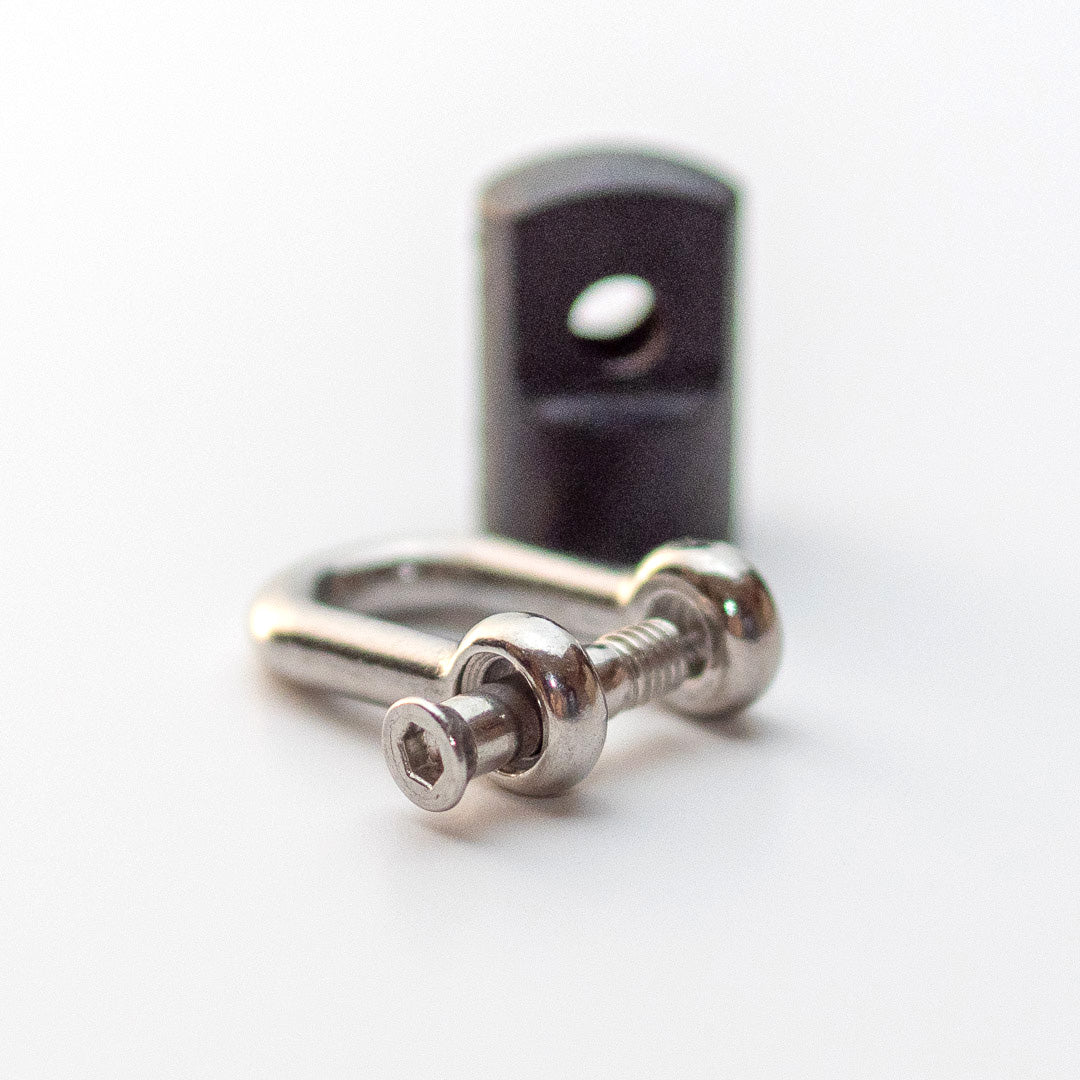

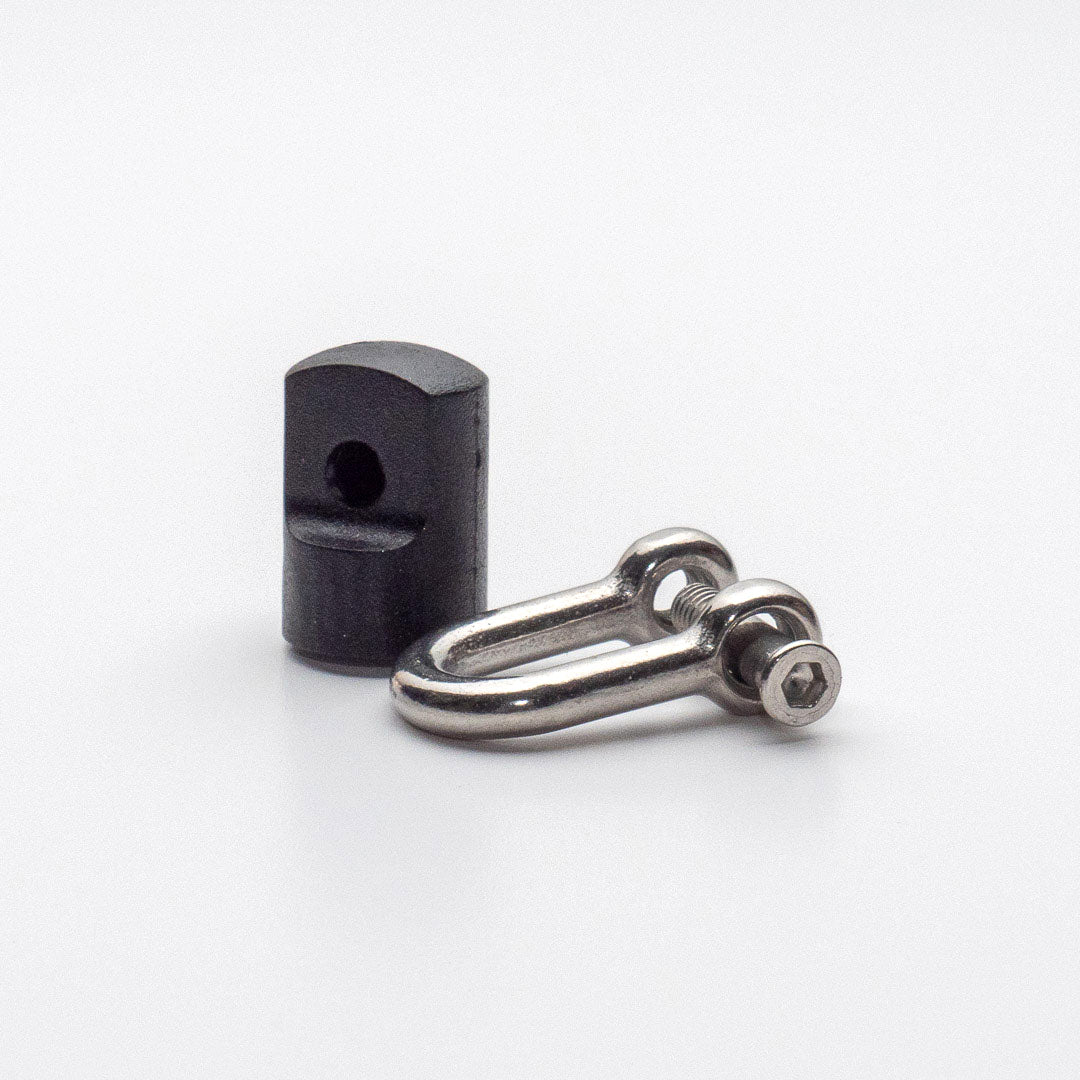
Ocean Waves wrist lanyard
Total length
118 cm, from the wrist attachment to the end of the carabiner
Weight
150 g with aluminium carabiner
226 g with stainless steel carabiner
Cable
90 cm long, 3.7 mm wide
Measured breaking strength
Full lanyard: 145 kg
Wrist band: over 255 kg, test bench maximum reached
Black cable: 170 kg
Lime green cable: 220 kg
Tested on a Lloyd LRX Plus materials testing machine with a 2.5 kN load cell.
Repeated shock load
5 drops of 5 kg from 1 m: passed
Safety notice: the Velcro must be fastened properly along its full length whenever the lanyard is used or tested. A closure that is not pressed shut will pass a test it should fail.
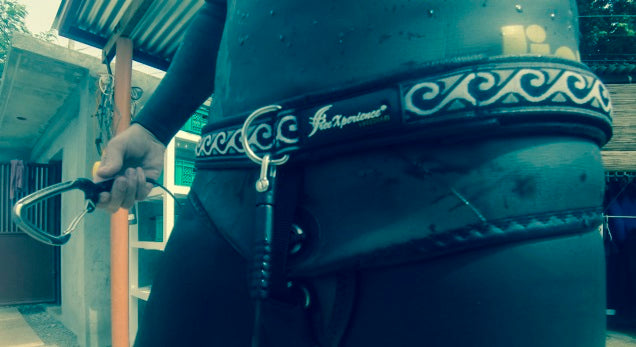
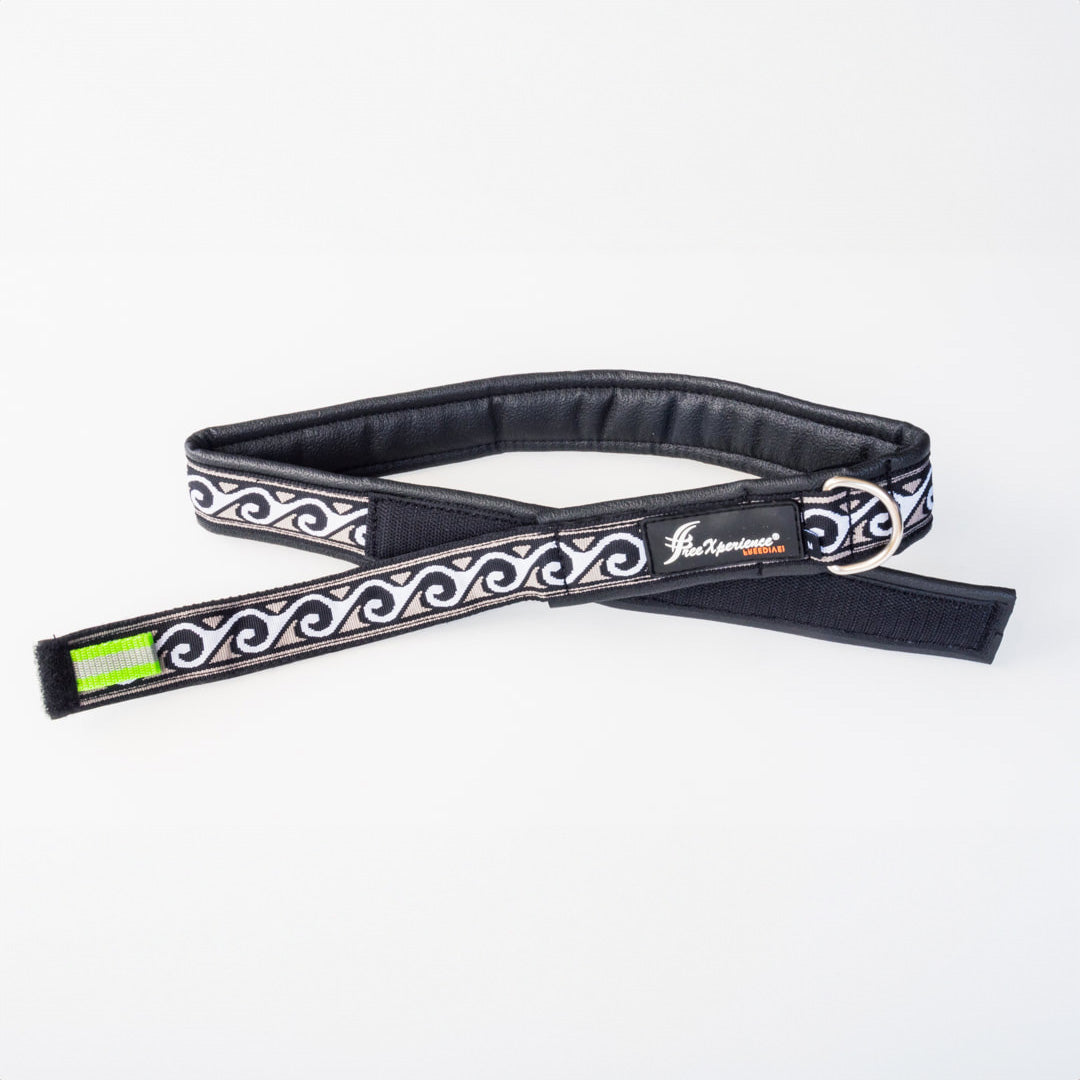
Ocean Waves belt lanyard
Total length
118 cm, from the belt attachment to the end of the carabiner
Weight
Size M: 213 g aluminium / 296 g stainless steel
Size L: 222 g aluminium / 304 g stainless steel
Size XL: 231 g aluminium / 312 g stainless steel
Cable
90 cm long, 3.7 mm wide
Measured breaking strength
Full lanyard: 145 kg
Belt: 170 kg
Black cable: 170 kg
Lime green cable: 220 kg
Tested on a Lloyd LRX Plus materials testing machine with a 2.5 kN load cell.
Repeated shock load
5 drops of 5 kg from 1 m: passed
Safety notice: the belt lanyard is for CNF only under AIDA §4.1.17.1, worn above the weight belt on a separate non-stretch belt.